
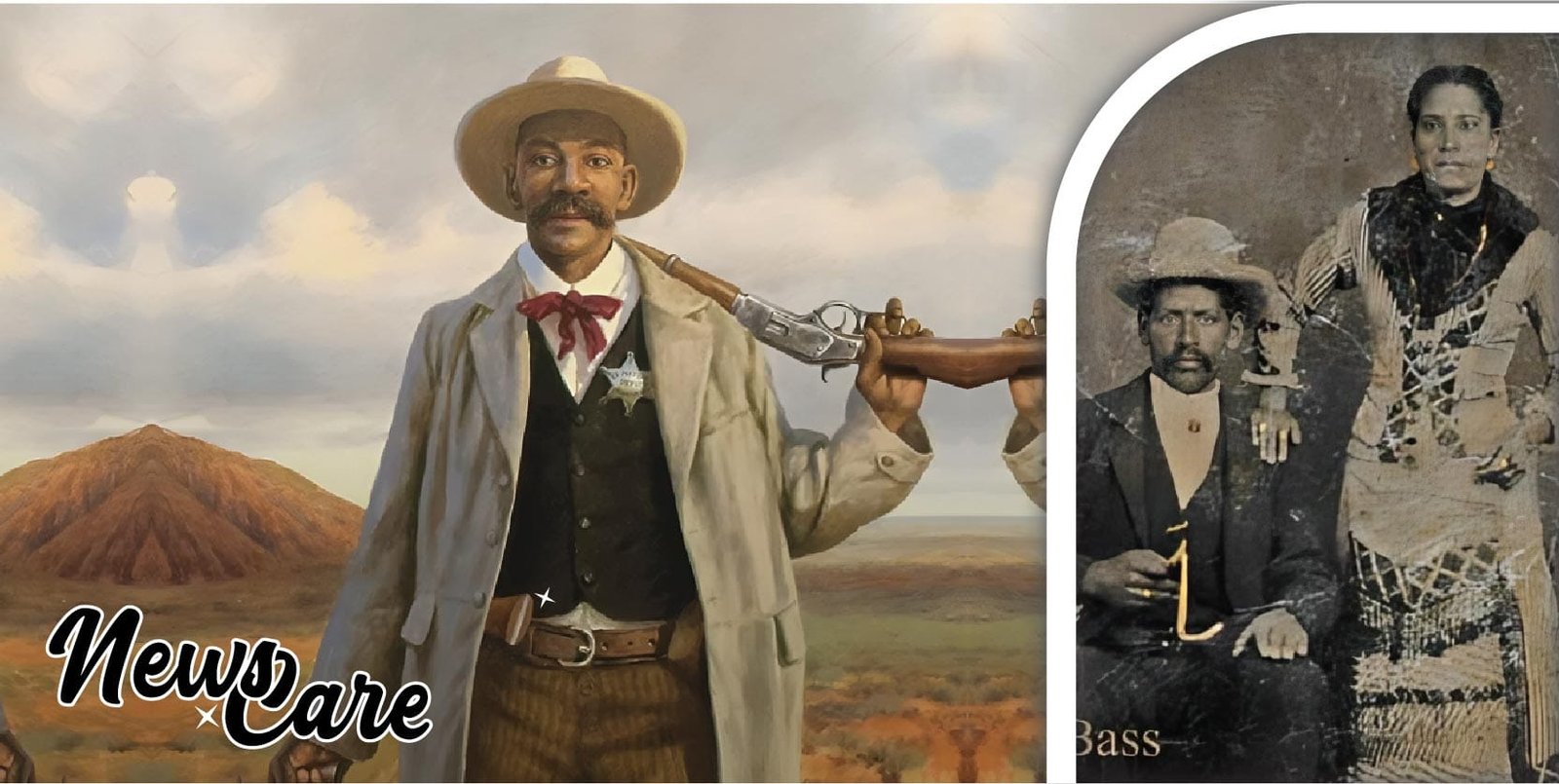
When people search for nellie jennie, they want to know who this woman really was and how she lived. Her name appears in history books, family trees, and even TV shows, but many details are still unclear. For a long time, the story of nellie jennie stayed in the shadow of her famous husband, Bass Reeves, one of the first Black deputy U.S. marshals in the American West.
Quick Bio of Nellie “Jennie” Reeves
| Item | Detail |
|---|---|
| Full Name | Nellie “Jennie” Reeves |
| Also Known As | Jennie Haynes, Jane “Jennie” Wilson Reeves |
| Famous For | First wife of Deputy U.S. Marshal Bass Reeves |
| Birth Date | Around 1840 |
| Birth Place | Texas, likely near Sherman |
| Nationality | American, African American |
| Status at Birth | Born into slavery |
| Husband | Bass Reeves (married after the Civil War) |
| Children | About 10–11 (including Sarah, Robert, Bennie, Lula, Bass Jr.) |
| Main Residence as Adult | Van Buren and Fort Smith, Arkansas |
| Date of Death | 19 March 1896 |
| Place of Death | Fort Smith, Arkansas, USA |
| Cause of Death | Cancer related peritonitis after about two years of illness |
Early life and background
The woman now called nellie jennie was born around 1840 in Texas. She was an African American girl who came into the world as a slave, not a free person. Most likely, she grew up on a large farm or ranch near Sherman, Texas, where many enslaved people worked long days with very little comfort or safety.
Records suggest that her mother was a woman named Betty Haynes, but her father’s name is not known. In those days, the lives of enslaved women were rarely written down. This is one reason why we know far less about her than about famous men from the same time. Her official papers are thin, and many parts of her childhood will probably never be found.
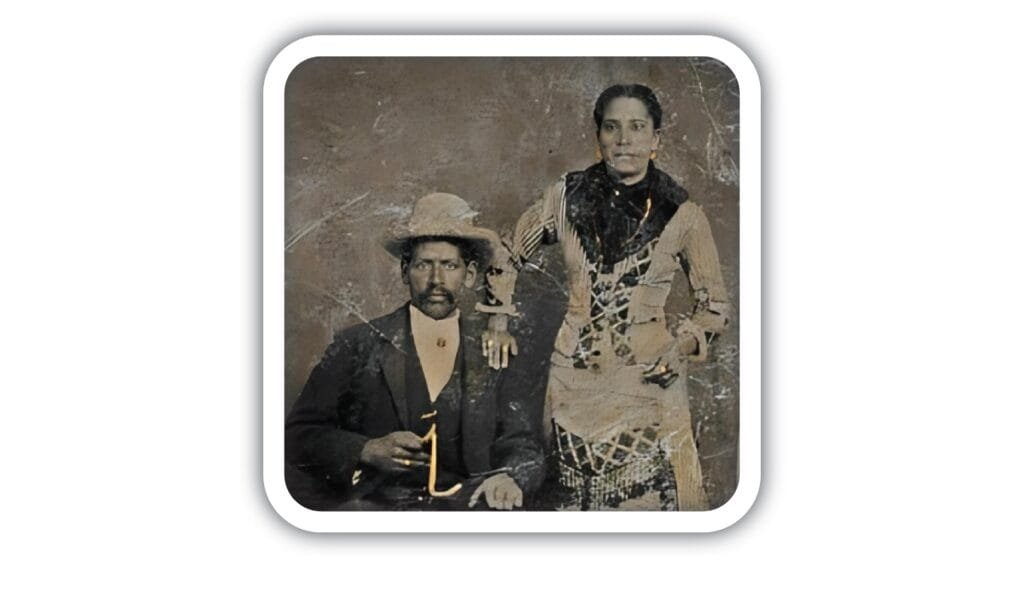
Nationality and identity
When people ask about nellie jennie nationality, the answer is simple. She was an American woman, born in Texas before the Civil War. Later, when slavery ended and Black people gained citizenship, she became part of the first generation of African Americans to live as legal citizens, even though racism and unfair laws remained very strong.
Still, it is important to see that she was more than a name next to a flag. She was a daughter, a wife, and a mother. She carried memories of slavery, fear, and hope inside her. Even if her voice is missing from the records, we can guess that her inner life was rich and complex, like that of any other human being.
Meeting Bass Reeves and early relationship
During the years before and during the Civil War, Bass Reeves lived in Texas with the white family that owned him. Many historians believe he and Jennie were held on nearby land, maybe even the same ranch. As enslaved people, they had no legal power over their own lives, but they could still form bonds of friendship, care, and love.
Later stories say that the connection between them began during those Texas years. While Bass escaped to Indian Territory and lived among Native nations, she seems to have stayed behind in Texas. Their paths came together again after the war, when both were free and trying to build a new future in a country that had just ended slavery.
Marriage and family life
After the war, Bass began working as a farmer near Van Buren, Arkansas. It is in this period that he and nellie jennie started their life as a married couple. Some records call her Jennie Haynes, others say Jane “Jennie” Wilson Reeves, but they all point to the same woman. This is why many people type the phrase nellie jennie bass reeves wife when they search online.
Together, they raised a very large family. Historians believe that Bass Reeves and his wife had around ten or eleven children. Among the names we know are Sarah (or Sally), Robert, Harriet, Georgie, Newland, Edgar, Benjamin (“Bennie”), Alice Mae, Lula, Homer, and Bass Jr. Their house would have been full of noise, work, and daily struggles, but also of strong family ties.
A marshal’s wife in a dangerous land
In 1875, Bass Reeves became a deputy U.S. marshal for the Western District of Arkansas. His job took him for weeks at a time into Indian Territory, chasing outlaws and hunting dangerous criminals. While he rode on these long trips, it was nellie jennie who stayed at home and kept the family together.
As the wife of a lawman, she faced her own kind of danger. She lived in a rough border area, with crime, racism, and fear always near. If trouble came to the door while Bass was away, she would have been the one to protect the children. Her calm, steady work at home made it possible for him to do his risky work on the trail.
Pain, loss, and family struggles
Life in the Reeves home was not only about duty and courage. There was also deep pain. Their daughter Lula died while still a teenager, likely because of epilepsy. Losing a child would have been a terrible blow for any parent, and it is hard to imagine how much grief Jennie carried in her heart after that loss.
There were other wounds. Their son Bennie killed his own wife in anger. In one of the most famous stories about Bass Reeves, he chose duty over feelings and arrested Bennie himself. For nellie jennie, this was not just an interesting tale. It was her own son, her own family, breaking apart in front of her, adding another layer of sorrow to her life.
Illness and the final years
Many readers today ask how did nellie jennie die, because they want to understand the end of her story. For years this detail was unclear, but research into funeral records and local papers gives us a clearer picture. The documents show that she became seriously ill in the mid 1890s and suffered for about two years before she passed away.
The medical notes say that nellie jennie died from peritonitis caused by cancer. Peritonitis is a dangerous infection inside the belly, and in her case it came as a result of a long fight with illness. She died on March 19, 1896, in Fort Smith, Arkansas, at about fifty six years of age. The bill for her burial was paid by her son in law, which suggests that her husband may have been away at the time.
Burial and resting place
After death, nellie jennie was buried in Oak Cemetery in Fort Smith. For many years, her grave had little or no clear marking, even though cemetery records showed the place where she lay. The short note nellie jennie d 1896 on some family and history pages refers to this simple fact: she died and was buried in that year in that city.
In more recent times, local historians and fans of Bass Reeves have shown greater interest in her grave. Some visits and projects have tried to give her more honor and a stronger marker, so that people can remember not only the famous marshal but also the woman who shared his early years and carried much of the unseen weight of his career.
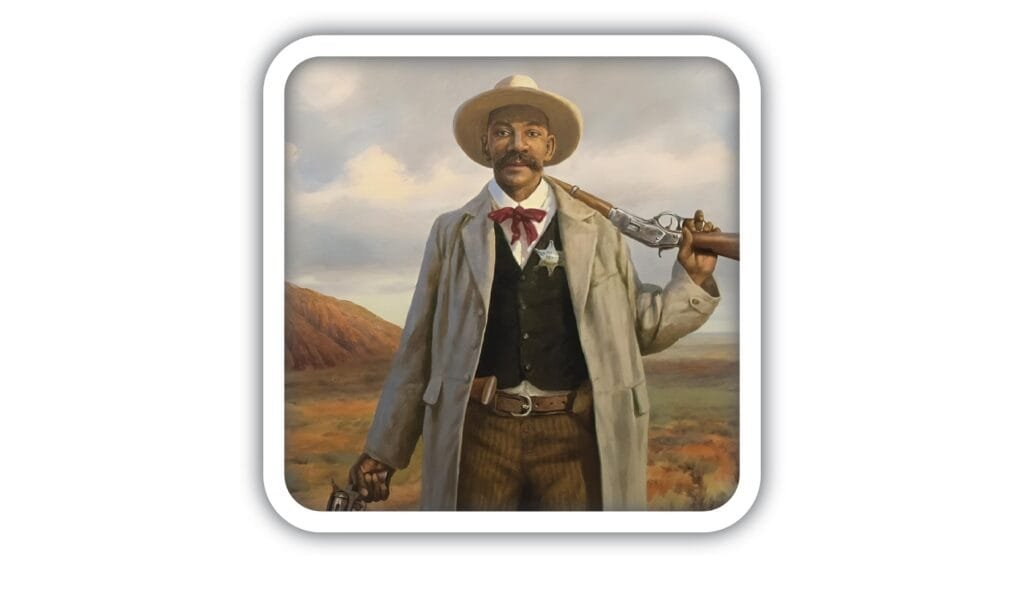
Was she really his “ex wife”?
Search engines show many results for terms like bass reeves wife nellie jennie or even Bass Reeves’ ex wife. This can be confusing. There is no sign that the couple divorced. The marriage ended because she died in 1896. Four years later, he married his second wife, Winnie Sumter, and stayed with her until his own death in 1910.
So it is more accurate to call her the first wife of Bass Reeves, not an ex wife in the modern sense of the word. Still, when people use phrases such as nellie jennie bass reeves wife, they are trying to connect her to the better known figure. It is a reminder that history often remembers men by name and turns women into footnotes, even when their influence was great.
TV, books, and modern picture of Jennie
For a long time, Jennie appeared only in small lines of old documents. Now she also appears in books and on screen. Modern writers speak of her as strong, patient, and deeply moral. In the television series Lawmen: Bass Reeves, the character of Jennie Reeves, played by Lauren E. Banks, is based on her, even though the show adds details to fill the gaps in the record.
These modern images are not perfect copies of the real woman, but they help new audiences see that nellie jennie was a real person, not just a name. When viewers watch the series or read articles, they begin to ask new questions, such as how did she die, what was daily life like in her home, and how much of her own strength shaped the man we now celebrate.
Frequently Asked Questions
1. Who was Nellie Jennie?
Nellie Jennie was the first wife of Bass Reeves, born into slavery in Texas around 1840. She later built a family with him in Arkansas.
2. How did Nellie Jennie die?
She died in 1896 in Fort Smith, Arkansas. Records say nellie jennie passed away from cancer related peritonitis after a long illness.
3. How many children did she have with Bass Reeves?
Most historians think Nellie Jennie and Bass Reeves had about ten or eleven children, including Sarah, Robert, Bennie, Lula, and Bass Jr.
4. Why do some people call her Bass Reeves’ ex wife?
People use that term because Bass Reeves married again after her death. But there is no sign of divorce; their marriage ended when she died.
5. Where is Nellie Jennie buried?
Nellie Jennie is buried in Oak Cemetery in Fort Smith, Arkansas. Her grave is listed in cemetery records and linked to the year 1896.
Why her story matters today
Learning about nellie jennie changes how we see the legend of Bass Reeves. His courage in the field was real, but it rested on the quiet courage at home. Every time he rode away to chase criminals, someone had to hold the family together, care for the children, and face danger without a badge or a gun.
By asking questions about her life, her nationality, and the way she died, we do more than chase loose facts. We also give respect to a woman whose life was shaped by slavery, freedom, love, and grief. Her story shows that history is not only made by heroes in the spotlight. It is also made by the people beside them, whose strength is just as real, even when it is almost unseen.