

In the rapidly evolving world of educational technology, a new name has emerged that promises to change how we think about classrooms: Schoology Alfa. For years, Learning Management Systems (LMS) have acted like digital filing cabinets places where teachers store grades and students upload homework. However, Schoology Alfa represents a complete reinvention of this concept, shifting from a simple storage system to a dynamic partner in the learning process. It is designed to solve the biggest problem in modern education: how to personalize learning for every single student without overwhelming the teacher.
From a System of Records to a System of Intelligence
The most defining characteristic of Schoology Alfa is its fundamental shift in philosophy. Traditional platforms are known as “systems of records” because they only document what has already happened. Schoology Alfa, by contrast, functions as a “system of intelligence.” This means the platform does not just sit and wait for data; it actively analyzes the information it receives to offer helpful suggestions.
When a teacher logs into Schoology Alfa, they are not greeted by a static list of courses. Instead, the system uses artificial intelligence to present the most urgent tasks first. It might highlight a group of students who are struggling with a specific concept or suggest a new resource that matches the current lesson plan. This proactive approach ensures that educators spend less time digging for data and more time actually teaching.
The Power of Predictive Analytics
One of the flagship features of Schoology Alfa is its ability to predict student performance before a failure occurs. In standard systems, a teacher might only realize a student is falling behind after they fail a major exam. Schoology Alfa changes this dynamic by monitoring subtle behavioral patterns.
The platform looks at “dependent measures” such as how long a student spends reading a text, how often they participate in discussion forums, and even the timeliness of their submissions. If Schoology Alfa detects a pattern that correlates with low performance—like a student skipping video introductions—it alerts the teacher immediately. This allows for early intervention, turning a potential failure into a success story.
A Liquid and Context-Aware Interface
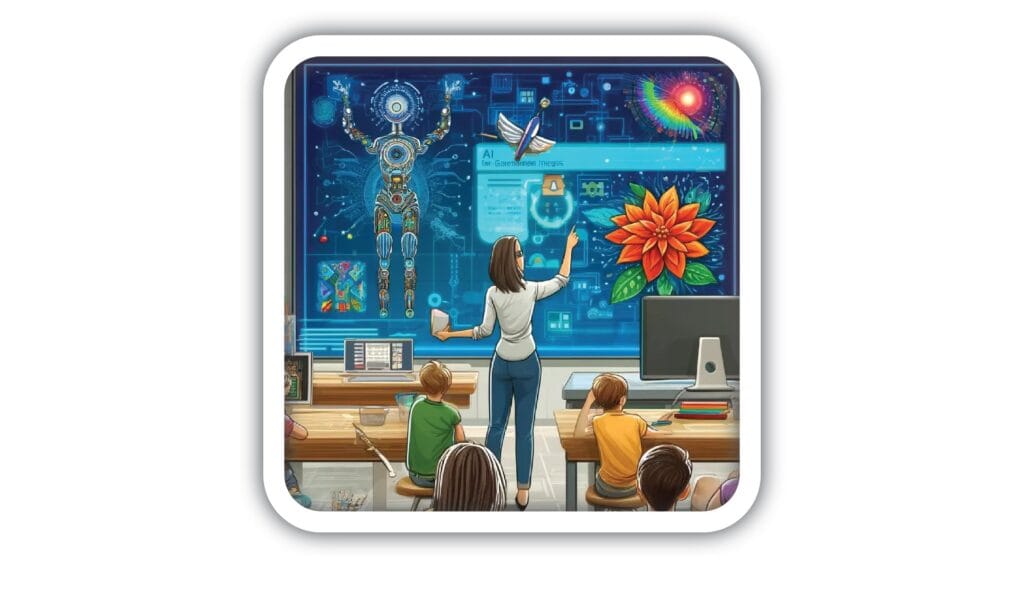
User experience is often a weak point in educational software, but Schoology Alfa addresses this with a “liquid” interface. This term refers to the dashboard’s ability to change its shape and options based on who is using it. A third-grade student does not need the same complex menu as a high school administrator, and Schoology Alfa recognizes this difference automatically.
The system uses context-aware navigation to hide unnecessary buttons and bring frequently used tools to the forefront. If a user is a math teacher who uses the equation editor daily, that tool will be front and center. This reduction in “cognitive load” means that users do not have to waste mental energy figuring out the software. Instead, the technology fades into the background, allowing the learning to take center stage.
AI-Assisted Content Creation
Teachers often spend hours searching for the right materials or writing quiz questions from scratch. Schoology Alfa aims to drastically reduce this workload through AI-assisted content creation. The platform includes tools that can automatically generate quiz questions based on a provided text or lesson summary.
For example, a history teacher can upload an article about the Industrial Revolution. Schoology Alfa can scan the text and instantly create a set of multiple-choice questions, tag them by difficulty level, and even assign them a “Depth of Knowledge” (DOK) rating. This automation allows teachers to create high-quality assessments in minutes rather than hours, freeing them up to focus on direct student mentorship.
Personalization at Scale
The “holy grail” of education is personalized learning, where every student gets a lesson plan tailored to their unique needs. In a physical classroom of 30 students, this is nearly impossible for one human to manage. Schoology Alfa makes this scalable by automating the differentiation process.
Using its deep learning algorithms, Schoology Alfa can assign different resources to different students within the same course. If Student A excels at visual learning, the system might present them with a video explanation. If Student B prefers reading, they receive a text-based article. Both students are learning the same core objective, but the path they take is optimized for their success. This capability allows a single teacher to effectively manage 30 distinct learning paths simultaneously.
Advanced Assessment Tools
Testing in Schoology Alfa goes beyond simple right-or-wrong answers. The platform supports adaptive testing, which adjusts the difficulty of questions in real-time. If a student answers a question correctly, the next one becomes slightly harder. If they struggle, the system offers a simpler question to identify exactly where their understanding breaks down.
This method identifies a student’s Zone of Proximal Development—the sweet spot where learning happens most effectively. Unlike traditional tests that only generate a percentage score, assessments in Schoology Alfa provide a detailed map of a student’s skills. This data is invaluable for teachers, parents, and administrators who need to track genuine academic growth over time.
Seamless Integration with LTI Advantage
No educational platform exists in a vacuum. Schools often use dozens of different apps, from Khan Academy to Nearpod. Older systems struggled to connect these tools, often forcing students to remember multiple passwords. Schoology Alfa is built on the LTI Advantage standard, which solves these integration headaches.
With LTI Advantage, Schoology Alfa can pass grades and content back and forth between third-party apps seamlessly. When a student finishes an activity in an external app, the grade appears instantly in the Schoology Alfa gradebook. Furthermore, the system handles “role provisioning,” meaning the external app automatically knows if the user is a teacher or a student, granting the correct permissions without manual setup.
Privacy and Security First
With the immense amount of data being processed, privacy is a major concern for schools. Schoology Alfa is built with a “privacy-first” architecture. The AI models often use a technique called federated learning. This allows the system to learn from data trends across different schools without ever exposing the personal information of individual students.
The platform is designed to be fully compliant with major laws like FERPA, COPPA, and GDPR. By prioritizing security, Schoology Alfa builds trust with parents and districts, ensuring that the benefits of AI do not come at the cost of student privacy. This ethical approach is critical for the widespread adoption of “intelligence-based” learning systems.
Bridging the Gap for Parents
Parental engagement is a key factor in student success, yet many parents find traditional LMS portals confusing. Schoology Alfa offers a simplified, mobile-friendly view specifically for families. This portal translates complex academic data into clear, actionable insights.
Instead of just seeing a list of confusing assignment codes, a parent using Schoology Alfa might see a summary like, “Your child is doing great in Science but has missed two homework assignments in Math this week.” This clarity empowers parents to support their children effectively at home. It turns the LMS from a barrier into a bridge between the living room and the classroom.
The Role of Cloud Infrastructure
To handle the heavy processing required for AI and real-time analytics, Schoology Alfa relies on robust cloud infrastructure. This ensures that the system is fast and reliable, even during peak times like finals week. The cloud-native design also allows for instant updates.
Schools no longer need to wait for “summer maintenance windows” to get new features. Improvements to the Schoology Alfa algorithms are rolled out continuously in the background. This ensures that schools are always using the most advanced version of the software without needing to install expensive local servers or hire large IT teams.
Reducing Teacher Burnout
Teacher burnout is a global crisis, often driven by the overwhelming administrative burden of the job. Schoology Alfa directly targets this issue by automating the mundane tasks that eat up a teacher’s day. Grading simple assignments, tracking attendance, and organizing digital files are handled largely by the system.
By removing these clerical duties, Schoology Alfa returns time to the teacher. This allows educators to focus on the human aspects of the job—mentoring, inspiring, and connecting with students—which are the parts of teaching that actually drive job satisfaction. In this way, the technology serves as a tool for retention, helping schools keep their best talent.
Smart Grouping and Collaboration
Group projects can be difficult to organize, but Schoology Alfa includes smart grouping features. The AI can analyze student profiles to suggest optimal groups based on complementary skills. For example, it might pair a strong writer with a student who excels at research, ensuring a balanced team.
The platform also provides digital workspaces where these groups can collaborate in real-time. Teachers can “drop in” on these virtual spaces to offer guidance, just as they would walk around a physical classroom. Schoology Alfa tracks individual contributions within the group, solving the age-old complaint of one student doing all the work while others ride their coattails.
Implementation and Training
Adopting a powerful system like Schoology Alfa requires a shift in mindset. It is not just about learning which buttons to click; it is about learning how to teach with a “co-pilot.” Successful implementation involves comprehensive professional development that focuses on data literacy.
Teachers need to understand how to interpret the predictive analytics provided by Schoology Alfa. They need to know when to trust the AI’s suggestions and when to rely on their own intuition. Schools that invest in this human side of the equation see the biggest returns. The tool is only as effective as the educator wielding it, and Schoology Alfa is designed to empower, not replace, the teacher.
The Future of EdTech with Schoology Alfa
As we look to the future, Schoology Alfa sets a new benchmark for what schools should expect from their technology. It moves the conversation away from “digitizing the classroom” to “enhancing the learning capability.” The focus is no longer on devices, but on the intelligence driving them.
By combining deep learning, predictive analytics, and a user-centric design, Schoology Alfa offers a glimpse into a future where technology adapts to the human, rather than the other way around. It promises a learning environment that is more efficient for teachers, more engaging for students, and more transparent for parents.
Conclusion
In summary, Schoology Alfa is more than just a software update; it is a comprehensive reimagining of the digital learning environment. By transitioning from a static system of records to a dynamic system of intelligence, it offers tools that genuinely augment human capability. From its predictive analytics that catch at-risk students early, to its liquid interface that simplifies the user experience, every feature is built with the end-user in mind.
The integration of Schoology Alfa into schools represents a significant step forward in closing the gap between the promise of personalized learning and the reality of the classroom. As AI continues to mature, platforms like Schoology Alfa will become indispensable allies in the quest to provide every student with a world-class education. For administrators and educators looking to future-proof their institutions, understanding and adopting these advanced tools is the key to unlocking the next generation of potential.